StainErase Pumice Stone
StainErase Pumice Stone
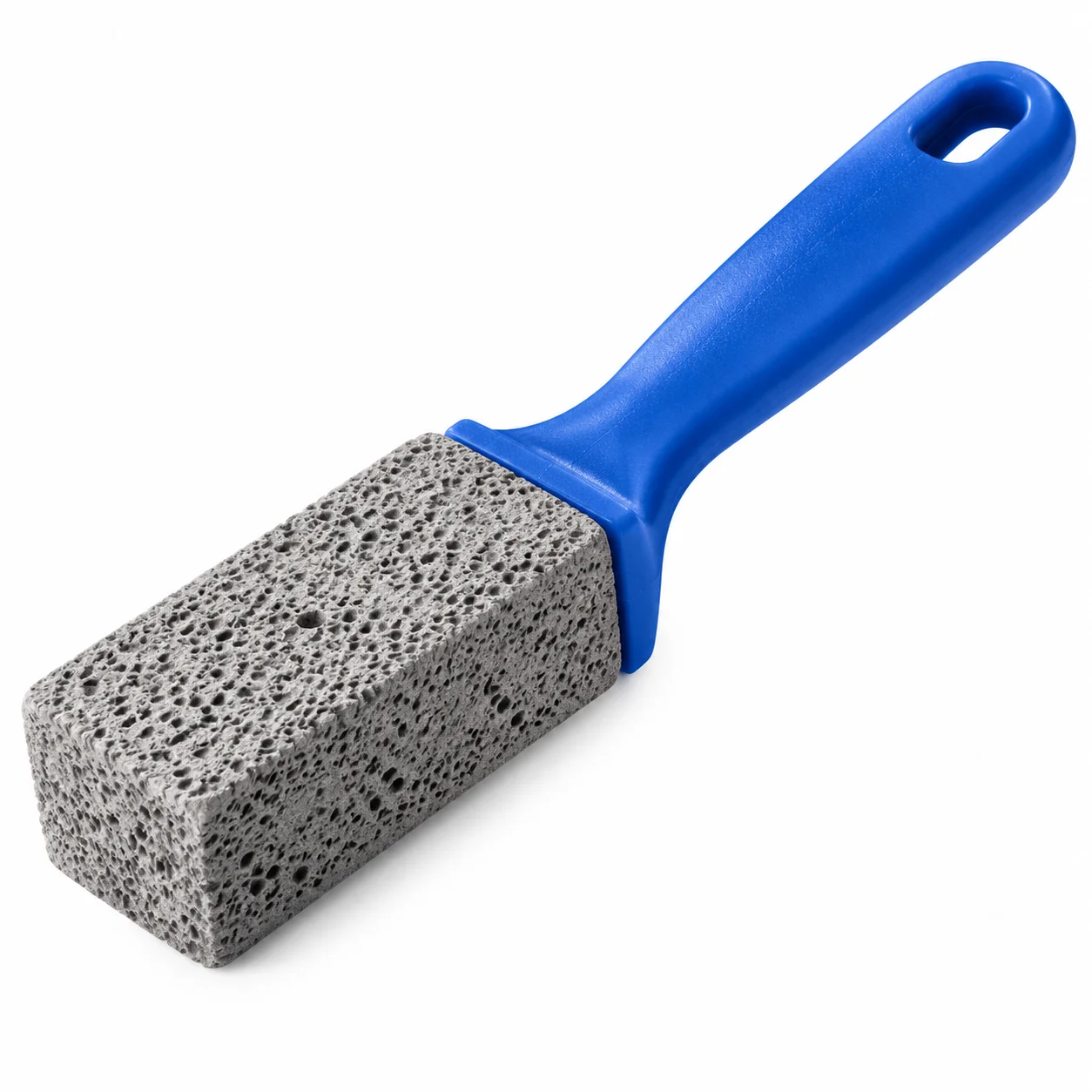
Natural volcanic pumice stone block secured to a reinforced ergonomic handle. Designed specifically to strip away persistent waterline mineral rings, calcium buildup, rust streaks, and algae marks from pool tiles and gunite surfaces without scratching glaze.
Package Includes
- 1x High-density natural volcanic pumice scrubbing block
- 1x Ergonomic heavy-duty quick-grip plastic handle
- 1x User care & surface compatibility guideline sheet
Engineered for Tough Mineral Buildup
Detailed dimensions, material attributes, and operational limits of the StainErase stone.
| Parameter | Specification Value |
|---|---|
| Abrasive Medium | Natural porous cellular volcanic pumice |
| Block Dimensions | 15 cm x 3.5 cm x 2.5 cm (6 in x 1.4 in x 1 in) |
| Handle Material | Chemical-resistant polypropylene with molded knuckle guard |
| Surface Compatibility | Ceramic tile, porcelain tile, concrete, gunite, plaster |
| Incompatible Surfaces | Vinyl liners, fiberglass pools, acrylic spas, painted surfaces |
| Wet Scrubbing Requirement | Always wet stone and surface thoroughly before contact |
Eradicate Stubborn Calcium Rings and Mineral Scale
Hard water rings along the pool waterline present one of the most frustrating maintenance challenges for pool owners. The StainErase Pumice Stone works mechanically by gently abrading mineral scale, calcium carbonate, lime deposits, and iron rust streaks without damaging the hardened glaze of ceramic pool tiles. Its cellular structure creates a micro-abrasive contact paste as you work, lifting away discoloration that standard nylon brushes and basic chemical cleaners cannot penetrate.
The integrated ergonomic handle keeps your hands protected from pool chemicals and prevents knuckle scrapes against concrete coping while you scrub. Pumice naturally conforms to curved grout lines, corners, and flat tile surfaces alike, ensuring thorough cleaning along the entire pool perimeter. Because it works mechanically without introducing hazardous acid fumes or altering total alkalinity, your pool remains safe for immediate swimming.
Proper Application & Surface Protection Steps
- Always saturate both the pumice stone block and the target pool tile thoroughly with water before initiating any scrubbing.
- Apply gentle, uniform back-and-forth pressure across the mineral stain rather than bearing down excessively in one focused point.
- Rinse the working area periodically with pool water to wash away loosened scale slurry and inspect progress.
- Never use dry or on vinyl, acrylic, or fiberglass finishes to prevent micro-abrasions and surface dulling.
Order Your StainErase Pumice Stone
Fast checkout with doorstep delivery. Fill out your details below to confirm dispatch.
StainErase Pumice Stone FAQ
Everything you need to know about tile safety, longevity, and proper handling.
No, as long as both the pumice stone and the tile surface remain completely wet during scrubbing. Pumice has a lower Mohs mineral hardness rating than ceramic or porcelain glaze, meaning the stone will wear down while lifting calcium deposits without damaging tile glazing. However, dry friction can scratch surfaces, so constant lubrication is essential.
Absolutely not. Pumice stone is strictly engineered for hard masonry materials such as ceramic tiles, porcelain, plaster, and unpainted gunite. Using pumice on soft surfaces like vinyl liners, fiberglass, acrylic spas, or painted pool basins will cause noticeable scratching, micro-grooving, and potential finish degradation.
A single stone block typically cleans between 30 and 60 linear feet of moderate calcium waterline buildup. The pumice naturally wears away as it grinds mineral deposits, creating an abrasive paste that aids in cleaning. Stone longevity depends on the thickness of mineral buildup and the total surface area treated.
Related Pool Surface & Care Gear
Need Guidance on Tough Waterline Stains?
Our water chemistry and pool surface experts are available to help you identify scale causes and choose the right restoration tools.