Effective Strategies for Removing Stubborn Pool Stains
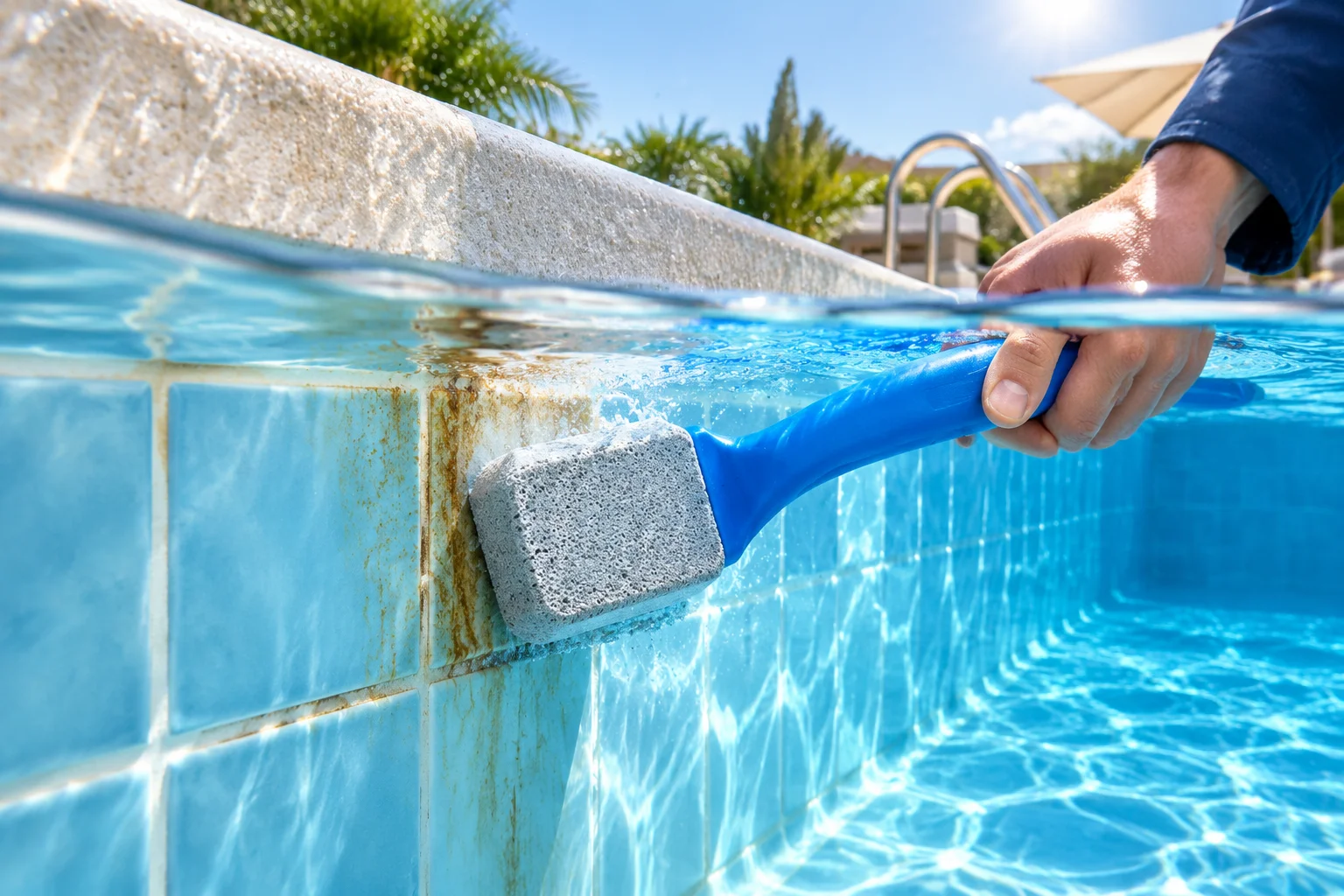
Unidentified pool stains cause needless frustration and costly chemical guesswork. Whether dark blotches stem from decomposing autumn leaves, oxidized well water minerals, or copper corrosion from aggressive water chemistry, treating the pool requires diagnosing the chemical class first. Rushing into abrasive scouring or dumping generic shock can lock stains deeper into plaster and pebble matrices. Here is how pool operators identify the culprit and restore pristine surfaces safely.
Surface Integrity
Preserves plaster, pebble, and vinyl liners by deploying calibrated chemicals before attempting mechanical abrasion.
Chemical Balance
Neutralizes dissolved iron, copper, and calcium before stains re-precipitate onto fresh underwater tiles.
Precision Targeting
Isolates organic tannins from stubborn metallic oxidation using simple at-home diagnostic spot tests.
01Diagnosing the Origin: Organic vs. Metallic Stains
Pool stains separate into two primary categories: organic contaminants and oxidized metallic minerals. Organic blemishes typically originate from decaying leaves, berries, acorns, algae die-offs, or worms settling on the pool floor. These produce greenish-brown, yellow, or grayish patches that sit directly on the porous finish. In contrast, metallic discolorations arise from dissolved metals introduced via municipal tap water, well sources, corroding pool heater heat exchangers, or low-grade copper algaecides. Metallic deposits often display reddish-brown rust streaks from iron, turquoise-blue tinting from copper, or deep brownish-black spotting from manganese.
To determine the exact category without commercial testing kits, conduct a simple spot evaluation. Place a trichlor chlorine tablet directly onto the discolored patch for approximately two minutes. When the stain lightens or disappears instantly, organic matter caused the discoloration. Conversely, if the chlorine puck produces no visible change, press a vitamin C tablet or a small sock packed with ascorbic acid against the surface. Ascorbic acid immediately reduces oxidized iron and lightens mineral scales, confirming a metal-based blemish.
02Targeted Chemical Treatments by Stain Category
Once the diagnostic test confirms whether the mark is organic or metallic, administer targeted treatments to lift the deposit into suspension without stripping pool plaster:
- Organic Matter: Shock the swimming pool to elevate free chlorine levels above 10 ppm while simultaneously holding pH between 7.2 and 7.4, brushing twice daily until tannins oxidize.
- Iron & Rust Deposits: Add granular ascorbic acid or citric stain lifting compounds directly over affected zones after lowering chlorine below 1 ppm to prevent chlorine from neutralizing the organic acids.
- Copper & Cobalt Salts: Circulate a concentrated diphosphonic sequestering agent for 72 hours, allowing the chelating molecules to bind dissolved copper before backwashing the filtration system.
Remember that lifting dissolved metals from your pool floor into the water column only solves half the problem. Without adding an active sequestering agent and filtering thoroughly, returning sanitizers and rising pH will immediately force those loose metal ions to precipitate back onto pool surfaces.
03Water Chemistry Targets for Stain Removal
Maintaining strict water chemistry parameters prevents newly dissolved metals from falling out of suspension and re-staining newly cleaned pool plaster.
| Parameter / Metric | Target Baseline | Recommended Action |
|---|---|---|
| Free Available Chlorine | 0.0 – 1.0 ppm (Metal) / 10+ ppm (Organic) | Lower chlorine before applying ascorbic acid; elevate chlorine to shock organic tannins. |
| Water pH Level | 7.0 – 7.2 during treatment | Slightly acidic water assists stain lifters; gradually raise back to 7.4 post-treatment. |
| Total Alkalinity | 80 – 100 ppm | Buffers against drastic pH spikes when administering granular acidic stain removers. |
| Metal Sequestrant Residual | 15 – 20 ppm maintenance | Prevents re-precipitation of iron and copper when re-chlorinating swimming pools. |
04Mechanical Scrubbing Tools and Techniques
When chemical treatments soften the stubborn mineral or hard-water crust, physical scrubbing accelerates complete surface restoration. For plaster, gunite, and concrete finishes, natural pumice stones mounted on telescopic poles grind through stubborn calcium silicate and waterline rings without scratching the substrate beneath. Always keep both the stone and tile surface completely submerged and thoroughly wet during use. Dry pumice will abrade ceramic glazing and gouge delicate borders.
For vinyl liners, fiberglass shells, or specialized acrylic spas, rigid pumice stones and wire brushes must never be used, as they pierce membranes and gouge gelcoats. Instead, rely on stiff nylon bristle brushes coupled with specialized citrus-based or enzyme cleaning gels. For localized stubborn spots on fiberglass, apply mild oxalic acid pastes with a non-abrasive melamine pad, working in gentle circular motions. Once scrubbing is complete, run the circulation pump continuously for 48 hours and clean or replace filter cartridges to trap dislodged particulates permanently.
Restore Pristine Pool Surfaces Today
Browse our proven line of stain-lifting granules, natural pumice stones, and high-efficiency sequestering agents engineered for vinyl, plaster, and fiberglass pools.