The Hidden Benefits of Regular Filter Cleaning
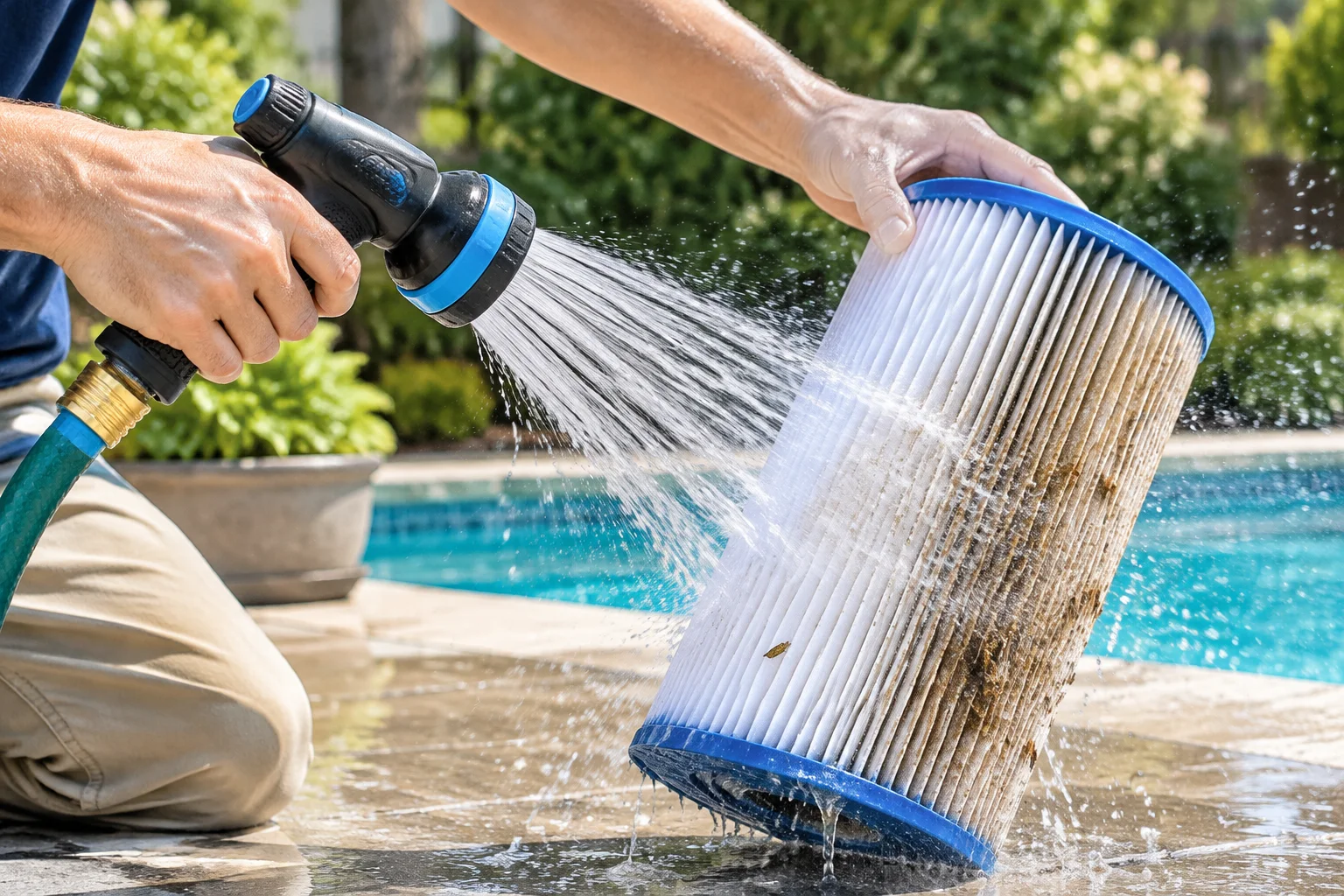
Your pool filter traps far more than stray leaves and dust. Every week, body oils, sunscreen, pollen, and microscopic algae spores pack tightly into the media, forcing the circulation pump to work harder for every gallon it moves. Cleaning or backwashing the filter whenever the pressure gauge climbs 8 to 10 PSI above its clean baseline restores smooth flow, trims monthly electricity use, and prevents costly equipment wear.
Pump Strain Prevention
Open filter passages keep backpressure low, protecting shaft seals, impellers, and motor bearings from overheating.
Lower Sanitizer Loss
Removing trapped organic waste prevents chlorine from burning off inside the tank before reaching the pool.
Predictable Flow Rates
Steady water turnover supports salt chlorinators, heaters, and automatic cleaners without flow-switch shutoffs.
01Lower Energy Bills and Longer Pump Life
Clogged filter media creates hydraulic resistance across the entire circulation loop. When debris coats the pleats of a cartridge or compacts the top layer of a sand bed, water velocity drops while system pressure rises. Single-speed motors draw extra amperage against that restriction, and variable-speed pumps automatically ramp up their RPM to maintain target flow, wiping out the energy savings they were bought to deliver.
Heat builds up quickly inside a restricted pump housing. Over an entire swimming season, elevated backpressure accelerates wear on mechanical shaft seals and shortens motor bearing life. Keeping the filter clean allows heaters and salt chlorine generators to receive consistent flow, avoiding nuisance low-flow error codes and premature part replacements.
02Reduced Chemical Demand and Clearer Water
Trapped organic debris sits directly in the path of chlorinated water. As leaves, skin oils, and cosmetic residues decay inside a neglected tank, sanitizer reacts with that trapped waste instead of protecting swimmers in the pool. Freshly rinsed media removes that hidden chlorine demand and brings back sharp water sparkle.
- Oils and lotions coat fibers and cause water to bypass dirty pleats through tiny tears or gaps.
- Backpressure drops skimmer suction, leaving floating pollen and insects spinning on the surface.
- Stagnant pockets inside dirty sand beds breed chloramines, creating harsh odors and eye irritation.
Pair regular hose rinses with an enzyme-based filter cleaner every season. Rinse between pleats from top to bottom at a 45-degree angle rather than blasting straight into the fabric, because excessive nozzle force damages the polyester fibers.
03Filter Pressure and Maintenance Benchmarks
Record your starting gauge reading right after installing a fresh cartridge or completing a backwash. Use these reference targets to plan cleanings before circulation drops.
| Parameter / Metric | Target Baseline | Recommended Action |
|---|---|---|
| Pressure Gauge Trigger | +8 to +10 PSI above clean start | Rinse cartridge or backwash sand/DE tank immediately |
| Cartridge Filter Rinsing | Every 4 to 6 weeks in peak season | Hose pleats thoroughly and soak in filter cleaner twice yearly |
| Sand Filter Backwash | Every 2 to 4 weeks (2 to 3 minutes) | Follow with a 30-second rinse cycle; replace sand every 5 years |
| DE Grid Deep Clean | Full teardown every 6 months | Hose grids clean, inspect manifold for cracks, and recharge fresh DE powder |
04What to Expect for Cartridge, Sand, and DE Filters
A standard cleaning routine takes 20 to 45 minutes depending on your tank style. For cartridge units, expect to shut off the pump, open the air relief valve, remove the drain plug, lift out the element, and wash away caked grime from every fold with a garden hose. Keeping a spare cartridge on hand lets you swap in a clean element right away while the dirty one soaks overnight in a degreasing solution.
Sand and DE filters rely on multiport valve backwashing for routine upkeep, yet periodic manual inspection remains essential. After backwashing a DE system, always add the manufacturer-specified amount of fresh diatomaceous earth through the skimmer so the fine grids stay protected from sticky oils. Once you reassemble the tank, lubricate the lid O-ring with silicone grease, bleed trapped air from the relief valve, and note your new baseline pressure for the weeks ahead.
Stock Up on Filter Care Essentials
Browse replacement cartridges, enzyme filter sprays, pressure gauges, and silicone O-ring lubricants built for reliable season-long flow.