Winterizing Your Hot Tub: A Step-by-Step Guide
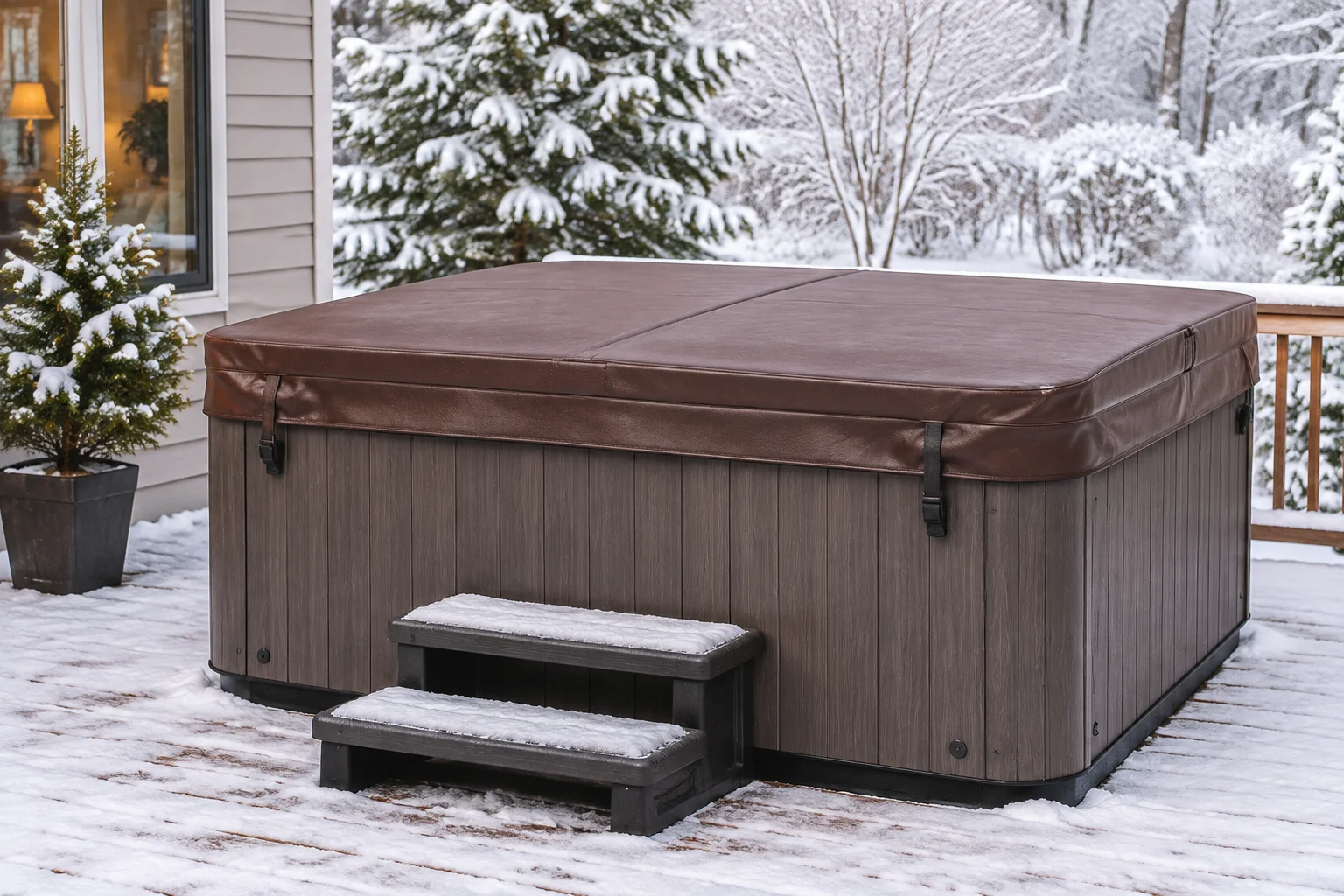
Freezing winter temperatures present severe risks to hot tub hardware when residual water remains trapped inside internal circulation lines, pumps, or heaters. Ice expansion produces tremendous pressure that readily cracks thick PVC manifolds, dislodges union gaskets, and fractures delicate heating elements within hours. Closing down your spa properly requires extracting every drop of moisture from plumbing channels and sealing the exterior structure against snow loads.
Freeze-Burst Protection
High-volume air purging drives hidden pockets of moisture completely out of internal water ways and pump wet ends.
Biofilm Elimination
Cleansing lines and conditioning surfaces prior to closing stops mold and organic residue from adhering to dry acrylic walls.
Thermal Cover Retention
Heavy-duty marine vinyl covers secured with locking wind straps protect the cabinet against severe snow loads and icy moisture.
01Power Shutdown and Controlled Drainage
Begin the winterization procedure by turning off the dedicated GFCI breaker at the main electrical sub-panel. Operating pumps or heaters without adequate water volume causes swift overheating, melting pump impellers and permanently damaging ceramic heating elements in seconds.
Attach a garden hose to the internal drain spigot, or drop a submersible utility pump into the lowest point of the footwell for rapid water discharge. A submersible pump evacuates several hundred gallons in under forty minutes. Remove all pleated filter cartridges from the skimmer cannister, rinse away debris, allow them to air dry indoors, and store them in a climate-controlled room until springtime reopening.
02Purging Plumbing Channels and Jet Manifolds
Gravity draining removes the vast majority of water from the main tub body, but flex-pipe loops and hydrotherapy jet assemblies retain gallons of standing fluid. Forcing this trapped liquid out requires a wet-and-dry vacuum connected to its blower port.
- Rotate every perimeter air control valve and diverter lever to the fully open position to allow clear airflow through internal piping.
- Press the blower nozzle tight against each individual jet opening, systematically cycling through every seat until droplets cease escaping.
- Unscrew equipment bay drain plugs from circulation pumps, auxiliary booster pumps, and heater tubes to allow remaining water to pour out into the compartment base.
In regions enduring prolonged sub-zero temperatures, pour specialized non-toxic propylene glycol pool and spa antifreeze into standpipes and floor suction fittings. Automotive antifreeze containing ethylene glycol must never be poured into a hot tub, because its toxic chemistry degrades acrylic surfaces and creates severe health hazards upon reopening.
03Critical Winterization Technical Benchmarks
Keep these practical baselines and verified operational parameters in mind when executing your seasonal shutdown:
| Parameter / Metric | Target Baseline | Recommended Action |
|---|---|---|
| Internal Line Moisture | Zero standing pools | Blow each jet port for 15 to 20 seconds with vacuum blower |
| Antifreeze Rating | -50°C Non-Toxic Propylene Glycol | Introduce 1 to 2 liters directly into the lowest suction manifolds |
| Filter Cartridge Storage | 100% dry, conditioned indoor room | Degrease with specialized spray, rinse clean, and keep away from frost |
| Cover Density & Taper | 4-to-2 inch high-density EPS core | Fasten all perimeter locking latches and secure outer wind straps |
04Shell Sanitation and Thermal Cover Installation
Once water extraction finishes, mop up remaining droplets in the footwell using clean microfiber cloths. Clean the empty acrylic shell using a gentle pH-neutral surface polish to remove sunscreen residues and mineral rings that could bake into the finish across several months of dormancy.
Position the thermal insulating cover on top of the rim, verifying that the inner vapor barrier lays flat against the acrylic edge. Fasten the tiedown buckles securely to the exterior cabinet walls. Covering the entire structure with a winter spa cap or fitted weather shield keeps melted snow from seeping past the center hinge seam, preserving insulation efficiency all winter long.
Equip Your Spa for the Freezing Season
Discover specialized non-chlorine oxidizers, surface cleaners, cartridge wash sprays, and winterizing accessories in our complete inventory.